

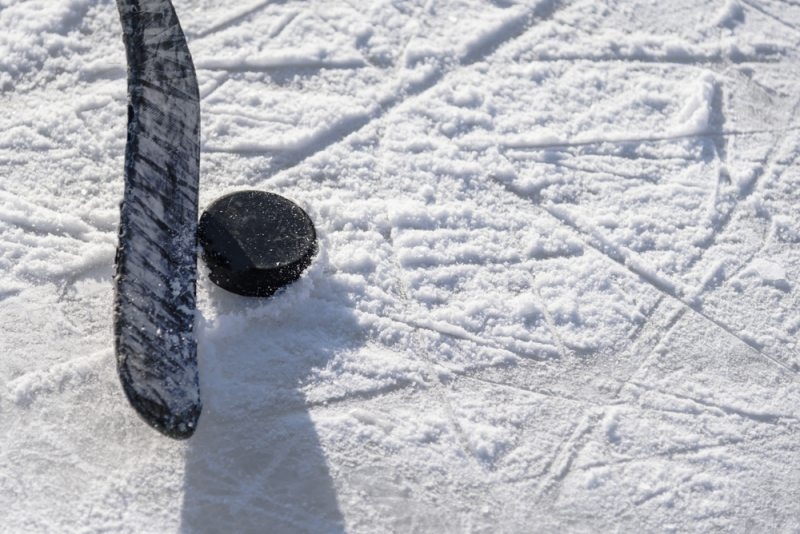
Using the correct hockey stick blade patterns can make shooting, passing, and puck handling feel comfortable. A hockey stick curve determines how the puck sits on your blade and releases when you shoot or pass.
Knowing “how hockey stick blade patterns affect shooting” and the hockey blade patterns before purchasing can help you identify a curve that is compatible with your game instead of following the crowd.
Wondering, "What hockey stick curve should I use?” Here’s your guide to how to choose hockey stick blade patterns to identify the curve easily.
Before you look at the diagram of the hockey stick curve and style, take a moment and think about how you use your hockey stick during a game. An aggressive wrist shot player will have different needs than one who passes, protects the puck, or defends.
Your position may provide some direction, but it should never predominate your curve. What is the best hockey stick curve for beginners? It's the one that complements your style of play and makes you feel good, comfortable, and confident while shooting, passing, catching, and handling the puck.
A hockey stick blade pattern is comprised of multiple features, including the location of the curve, face angle, lie, depth of curve, and toe shape. All of these elements are factors of blade pattern.
The curve of the blade on a hockey stick can be made further from the heel (centered) to the toe of the stick. This shifts the point on the blade at which the puck will naturally strike it. That's why hockey stick curve styles may feel very different, even between the same-looking blades.
Ways to Drive a Hockey Puck: There is a variety in the shape of a hockey stick puck curve that may affect the collection of the puck and the launch. For instance, you might notice that open-faced scooped hockey stick curves can increase the elevation of the puck, while moderate or flatter curves may keep the puck flatter.
The more severe hockey stick blade curve might provide a more natural cradle for wrist shots and snaps. But if you prefer an aggressive curve, you might need to make more adjustments for receiving passes and making passes yourself. For an all-purpose stick, go with a more modest hockey stick blade curve.
Choosing the right curves on your hockey stick blade involves more than just shooting. You also need to think about puck control, receiving passes, and stickhandling for all puck carriers.
Looking to understand "How does a hockey stick curve affect puck control?” Look at how the puck sticks to the blade when you carry it around. A medium curve can allow for a predictable touch and make transitioning from forehand to backhand easier.
Pay attention to:
Most patterns of hockey stick curves can be generally categorized into the heel, mid, and toe curves. A heel curve has a larger concentration of the hockey stick shape at the heel of the stick. A mid curve has a lot of the hockey stick shape in the middle of the stick.
A hockey blade curve chart can also indicate if a pattern has an open or closed face. Open curves can assist with lifting the puck, whereas more closed designs can create a flatter shot. This is why certain hockey blade patterns may respond differently when shooting the puck.
The more common charts include P88, P92, and P28, which you may find in a hockey stick shape chart. While having these names makes comparing the sticks easier, you can't think of these as precise measurements for all manufacturers.
It's possible a hockey stick blade pattern chart will describe the P88-style blade pattern as more of a "jack of all trades," the P92-style blade pattern as more open, and the P28-style blade pattern as more toe-oriented. The feel is potentially different due to lie, toe shape, construction, and blade stiffness.
Switching Brands: When finding a new brand of hockey stick blade pattern chart, people may attempt to look for a similar pattern by changing manufacturers. Even if the pattern numbers are equal, the feel may not be exactly the same.
When comparing a hockey stick blade pattern chart by brands, consider:
Most definitely, a hockey stick pattern chart can help to narrow down your options. But testing out a similar stick can at least give you a feel of the blade and its movement.
Beginning players often wonder which is the best hockey stick curve for beginners. Rather than settling for an aggressive pattern straight away, beginners may prefer to start with a moderate pattern that helps to develop many basic skills.
It's easier to practice the basics of passing, receiving, shooting, and stickhandling with a flexible hockey stick curve without exhibiting a sharp tendency towards a certain style of play. When you're just trying to figure out the hockey stick curve chart for beginners, look for control and consistency.
The hockey stick curve chart will compare features like depth of the curve, location of the curve, face angle, and toe shape. A hockey stick blade pattern chart is ideal when you know what pattern you like and are simply looking for a substitute.
But a hockey blade curve chart isn't all of your decision-making. Stick length, flex, lie, weight, blade stiffness, and hockey stick material all also play a part. Use it to compare different blades, but don't rely solely on it.
It's easy to assume that the most commonly used blade pattern is the best choice for you. But all players shoot differently and have different puck-handling skills, puck touches, and grips.
Judge the pattern of a hockey stick blade by your comfort with how the puck hits. If your puck enters and leaves the blade smoothly when shot, and you can aim your shots precisely, then a popular curve may just be right for you.
To compare curves, narrow your selection of curves to two or three with a similar profile. Then choose what type of play the curve should complement.
A shooting player might value release and puck lift, and a puckhandler and stickhandler might value sole puck control as areas of strength. Beginners may find a hockey stick with a moderate degree of curve to start with and try out different hockey stick blade patterns as they improve.
Knowing hockey stick blade patterns can make selecting a stick much easier. The style of a hockey stick curve can affect your shots, passes, puck control, and release, and a hockey stick blade curve can be a different experience depending on its position, depth, face angle, and toe shape.
Compare these with a hockey stick curve chart and hockey stick blade pattern chart… Especially when changing brands. Though ultimately, whatever feels right for you and your swing is what's important. Not every hockey stick curve is right for everyone, so aim to find a line that provides control and consistency in your game.
Yes. Players typically use one curve for wrist shots, snap shots, slap shots, and one-timers. Yet various curves can bring out distinct aspects of your shot. A flexible mid-range curve is a good investment for a player who constantly mixes up shooting styles.
Yes. The shape of the curve and face angle can actually change the way the puck leaves your blade on a pass. Aggressive pattern curves—the more aggressive a pattern is, the more control of your blade angle it takes to make a pass.
Neither is more vital than the other. Flex is concerned with how the stick loads and releases energy, whereas the blade curve is where and how the stick hits the puck and where it drops the puck to create a certain shot. Both must be combined for best results.
Yes; however, it could need more adjustments than a moderate style. Toe line hockey blade patterns are best for players who have fast shot releases and certain kinds of stickhandling styles. For beginners, a simple, comfortable, and predictable curve is best.
There is no schedule. If you are comfortable with your current curve and it works well with your shooting and puck handling, then there isn't a reason to change. Explore experimenting when your style of play, style of shooting, or skill priority shifts.
This content was created by AI